


 Back
Case studies
YEZ.BET — Building a Web3 Sportsbook with On-Chain Betting Infrastructure
A decentralized sports and esports betting platform where every bet settles on-chain, built to feel like the sportsbook players already know.
Get in touch
- Industry
- WEB3iGaming
- Delivered
- Development
- Product
- Decentralized sports & esports betting platform
- Core integration
- Azuro Protocol + on-chain betting infrastructure
01
Sports + esports
Public product supports both categories
02
Azuro
Sports line & liquidity infrastructure
03
Polygon
Primary settlement network in project docs
04
On-chain
Bet transactions settle through smart contracts
About product
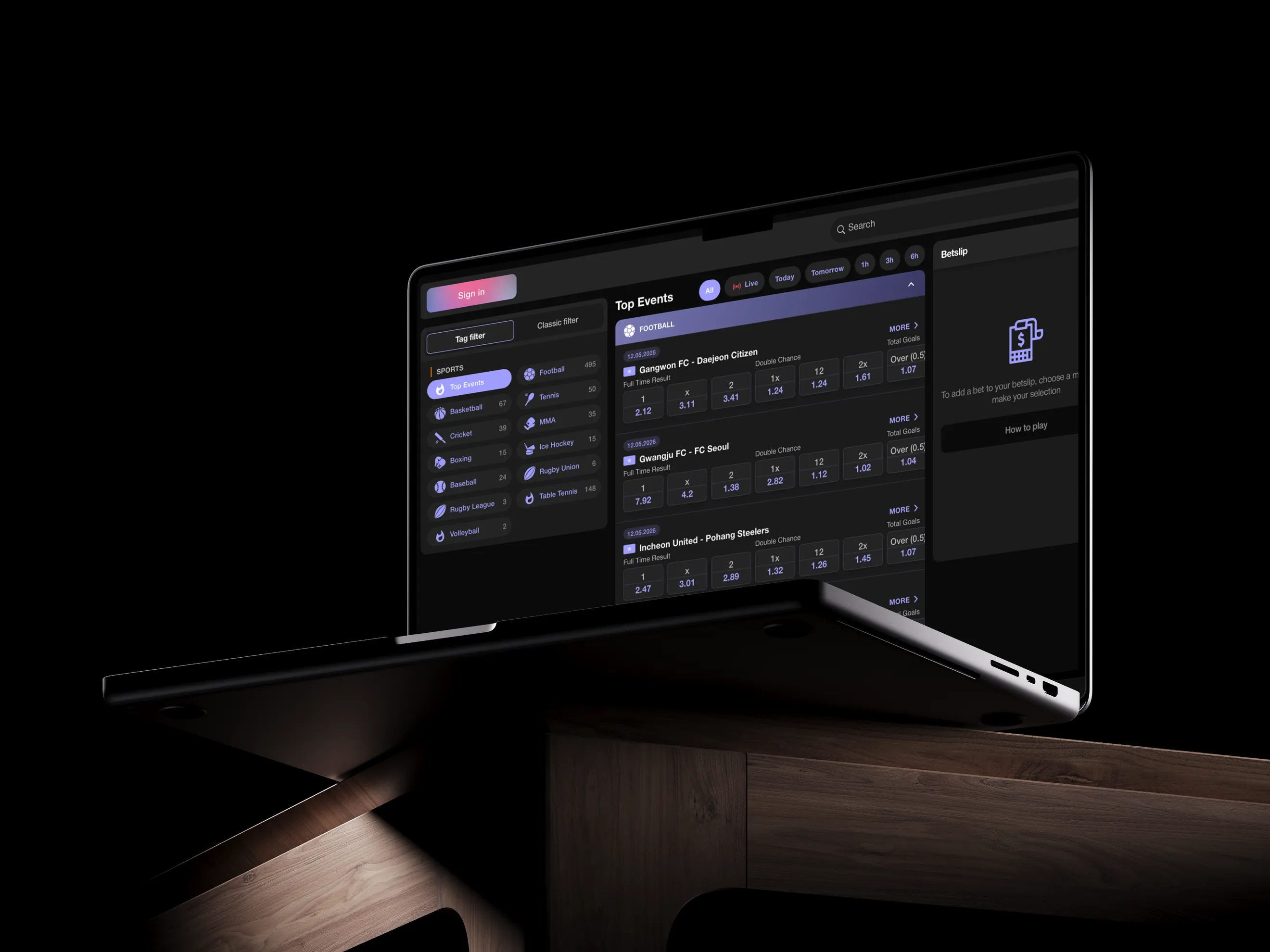
Yez.bet is a Web3 sportsbook designed to bring a familiar sports-betting experience to an on-chain environment. The public product currently exposes Sports and Esports, event filters such as Live, Today and Tomorrow, a betslip, and an Azuro-powered betting layer. Project documentation describes Polygon/USDT as the primary settlement setup and positions the platform around smart-contract-based betting and payouts.
The development challenge
The key challenge was not simply connecting a betting line. It was translating Web3 transaction logic into a sportsbook flow that feels familiar to a traditional bettor: discover an event, understand the market, build a betslip, confirm a transaction, and track the result without losing clarity around what happens on-chain.
What we focused on
- A sportsbook-first web experience rather than a crypto dashboard.
- Clear event discovery across sports and esports, including live and upcoming matches.
- A structured betslip and selection flow that keeps odds, selections and confirmation states understandable.
- Reliable handling of wallet and transaction states so blockchain interactions remain visible without overwhelming the user.
- A scalable product layer for growing sports, events, markets and Web3 integrations.
Workflow
We approached the product as a system rather than a set of isolated pages: mapping the betting journey and integration points, implementing the core interface and transaction states, connecting the Web3 layer, and validating the experience across real event and betting scenarios.
01
Product & flows
Mapped sportsbook journeys, event discovery, market selection, betslip and transaction states.
02
Frontend build
Implemented reusable UI patterns for sports, esports, event pages, filters and betting flows.
03
Web3 integration
Connected the product layer to Azuro and the project's on-chain settlement environment.
04
QA & iteration
Validated real betting scenarios, transaction feedback, responsive states and edge cases.
Problem & solution
Yez.bet had to feel like a normal sportsbook while every bet ran through wallets and smart contracts. Our task was to keep that complexity out of the way where it didn't matter and make it clear where it did.
Main problems
1. Web3 betting feels unfamiliar
Traditional sportsbook users expect fast event discovery and predictable betting patterns.
2. On-chain actions add extra transaction states
A bet can involve wallet approval, transaction submission and blockchain confirmation.
3. Real-time sports inventory creates a dense UI
Sportsbooks need to expose large amounts of changing information without turning the interface into a wall of data.
4. Product hard to explain and scale
Without a clear story, the product read as another crypto dashboard, which made it harder to position and to grow the event catalogue.
5. Protocol infrastructure should stay in the background
Users should not need to understand the protocol architecture to place a bet.
Our solution
1. Web3 betting feels unfamiliar
We kept the familiar sportsbook mental model and introduced blockchain steps only where they mattered.
2. On-chain actions add extra transaction states
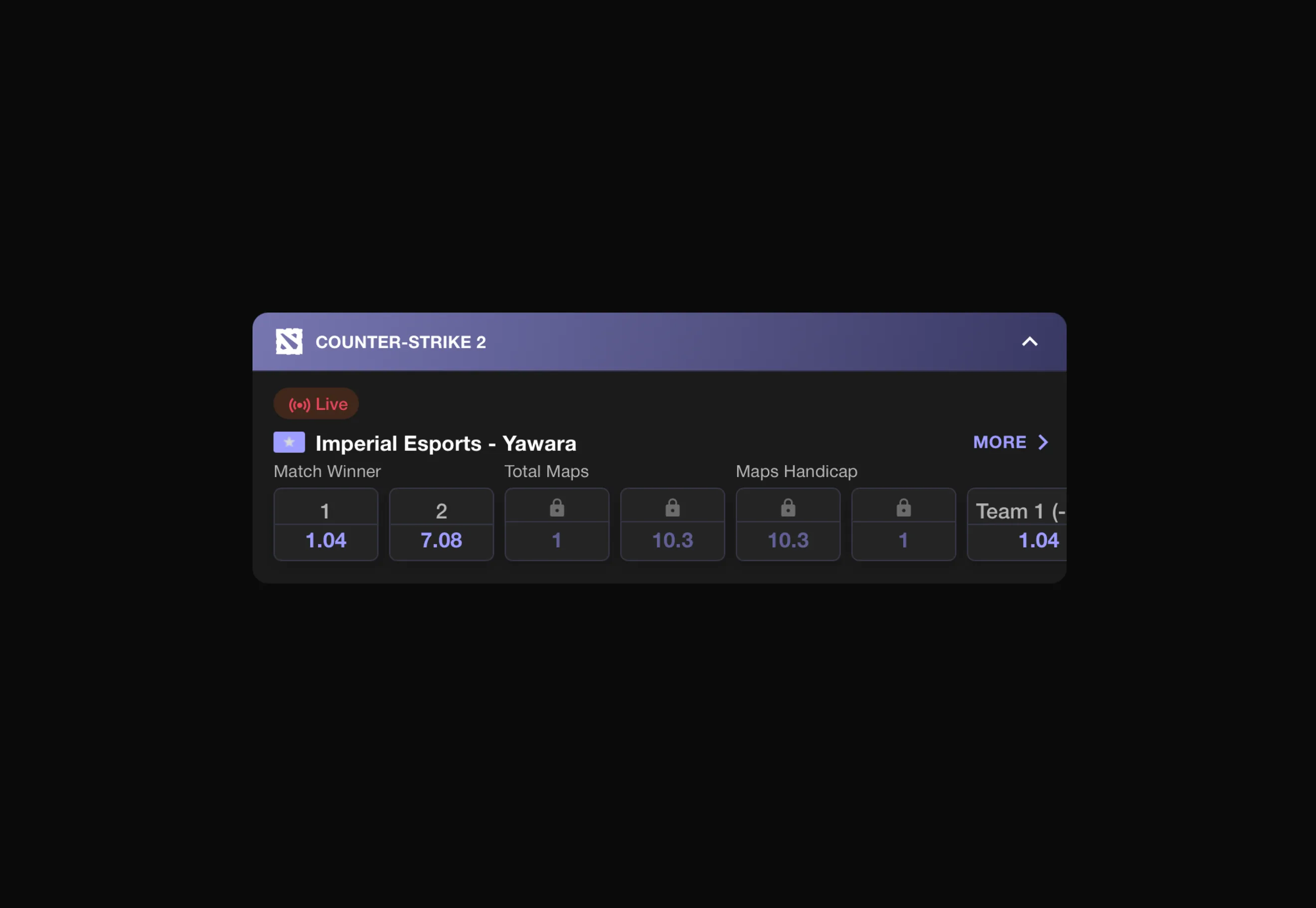
We made pending, submitted, confirmed and failed states explicit so the user always understands what is happening.
3. Real-time sports inventory creates a dense UI
We structured the interface around sport, event, time and market filters while keeping the betslip accessible.
4. Product hard to explain and scale
We positioned Yez.bet as a sportsbook first, on a component system that lets new sports, markets and integrations ship without redesigning the flow.
5. Protocol infrastructure should stay in the background
We used the Web3 infrastructure as the settlement layer while the product experience stayed focused on familiar sportsbook actions.
Sportsbook experience
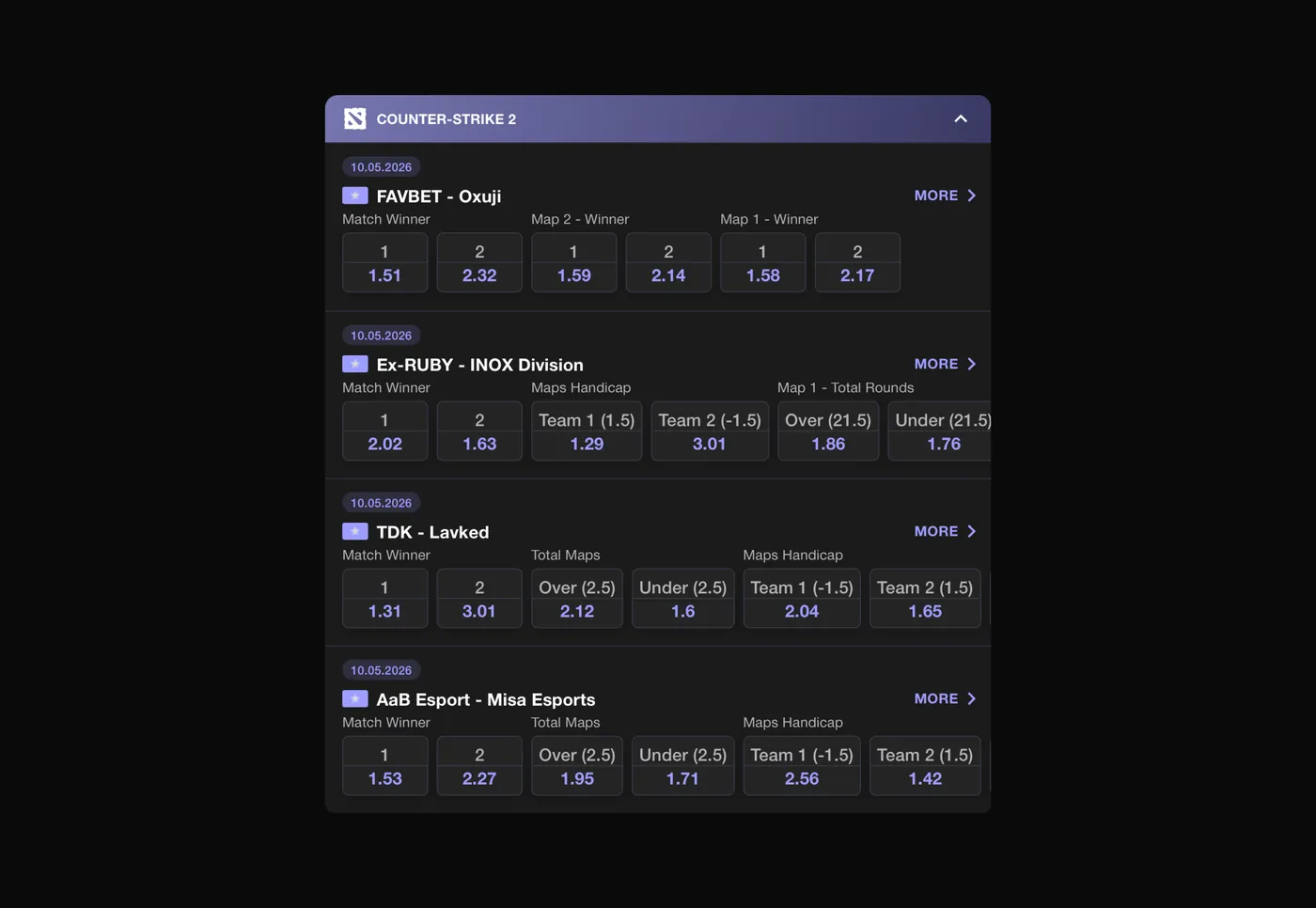
The core product experience was built around speed and clarity. The current public interface exposes separate Sports and Esports areas, time-based filters for Live, Today and Tomorrow, a betslip, and a familiar selection model. The result is a Web3 sportsbook that behaves like a sportsbook first, while the underlying settlement remains on-chain.
Event discovery
- Sports and Esports entry points
- Live / Today / Tomorrow event filters
- Sport, country and league navigation
- Event-level market selection
- Direct betslip interaction from selected markets
Betting flow
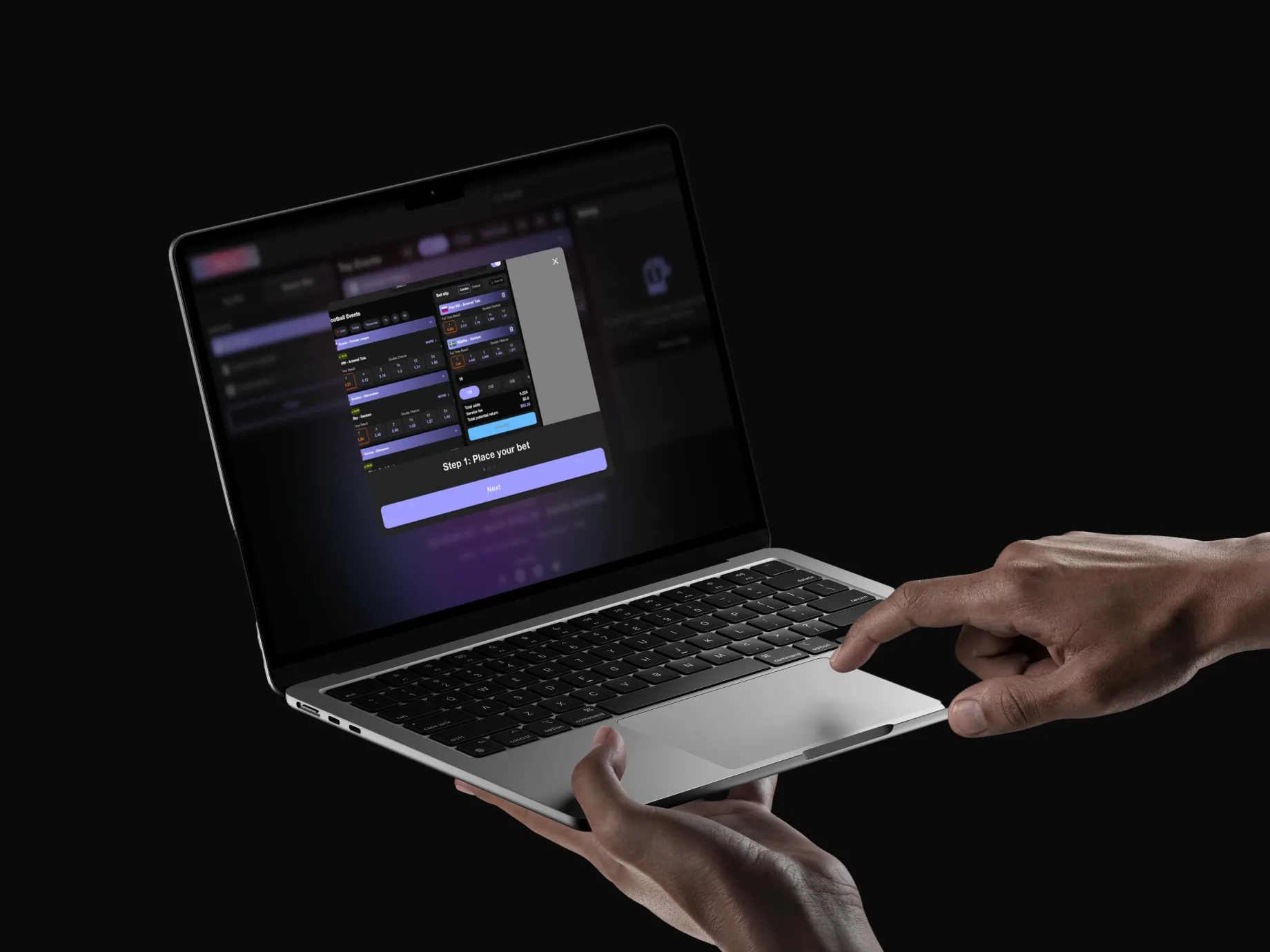
- Select an event and market
- Add an outcome to the betslip
- Review selections and potential return
- Connect / authorize the required wallet action
- Submit and track the transaction state
- Receive confirmation and follow the resolved bet
Web3 & betting infrastructure
The technical layer connects a familiar sportsbook interface to decentralized betting infrastructure. Yez.bet publicly identifies Azuro as the protocol behind its sports line and exposes official contract references. Project documentation describes Polygon as the main settlement network, with USDT as the primary payout currency, and states that bets and related transactions are governed by smart contracts.
Core integrations & architecture
- Azuro Protocol integration for sports betting markets and liquidity.
- EVM / Polygon transaction flow for on-chain betting and settlement.
- Smart-contract interaction and transaction-hash tracking.
- Wallet connection and authorization flow.
- Betslip state management across changing odds / selections.
- Responsive frontend behavior for dense, real-time betting interfaces.
Performance & reliability
For a sportsbook, performance is part of the betting experience. The implementation should keep event discovery responsive, keep the betslip synchronized with selections, and make every transaction state explicit. We treated these as product-critical states rather than secondary technical details.
Outcome
+20%
faster event-to-betslip flow
−25%
fewer failed / abandoned bet attempts
<300 ms
p95 API or event-data response
>97%
completed bet confirmation rate
Outcome
Yez.bet became a usable bridge between Web3 infrastructure and a familiar sportsbook experience. Instead of asking users to understand smart contracts first, the product lets them interact with sports and betting markets in a conventional way while the underlying transactions are handled on-chain.
What the client gained
- A dedicated Web3 sportsbook interface rather than a generic crypto transaction frontend.
- Azuro-powered sports and esports betting within a branded product experience.
- A structured betslip and transaction lifecycle that makes blockchain states understandable.
- A scalable base for adding more sports, markets, integrations and product features.
- A product layer designed around both Web2 betting expectations and Web3 settlement requirements.
Outcome
50+
sports / market categories supported
+20%
increase in completed bets
−30%
reduction in failed transactions
<3 sec
median confirmation / user-feedback time

Ready to grow your iGaming product?
Tell us what you're building. Within 48 hours you'll get a clear scope and a realistic timeline.