


 Back
Case studies
Predictrum — Where Market Risk Becomes a Game
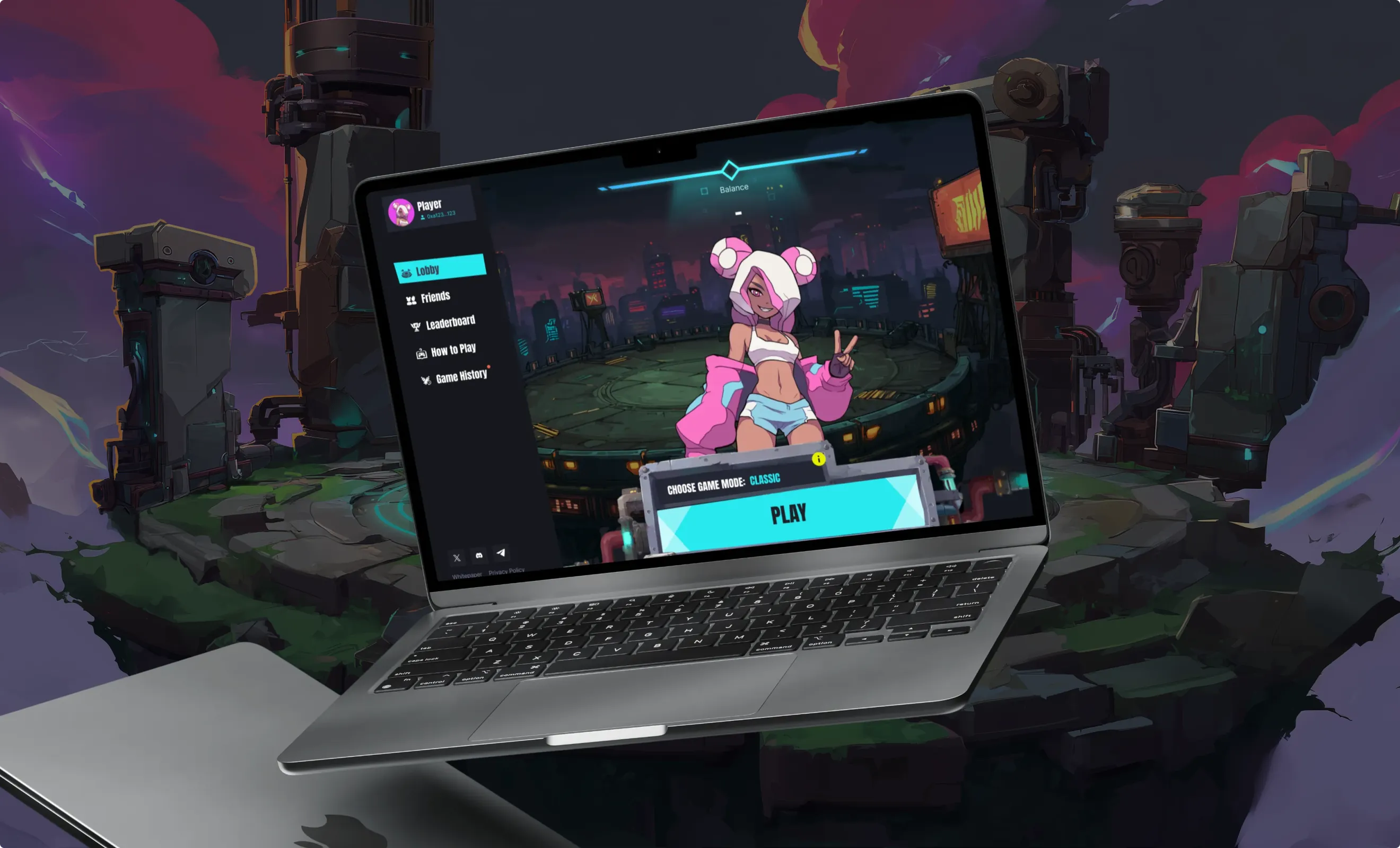
Predictrum is a Web3 PvP prediction game where players compete by forecasting real-time market price movements. We transformed complex trading logic into an accessible game loop with clear states, risk awareness, and instant feedback.
Get in touch
- Industry
- WEB3iGaming
- Delivered
- UI/UX DesignDevelopmentMarketing
- Tech stack
- React, WebSockets, Node.jsBlockchain Oracles, Provably Fair Random Generation
Outcome
900+
Active community ambassadors driving organic growth
<300ms
Game action latency
50
Influencer partnerships supporting launch and reach
100%
Provably fair mechanics with near-perfect verification rate
600+
Users in the waitlist
1000+
Supports concurrent players
About product
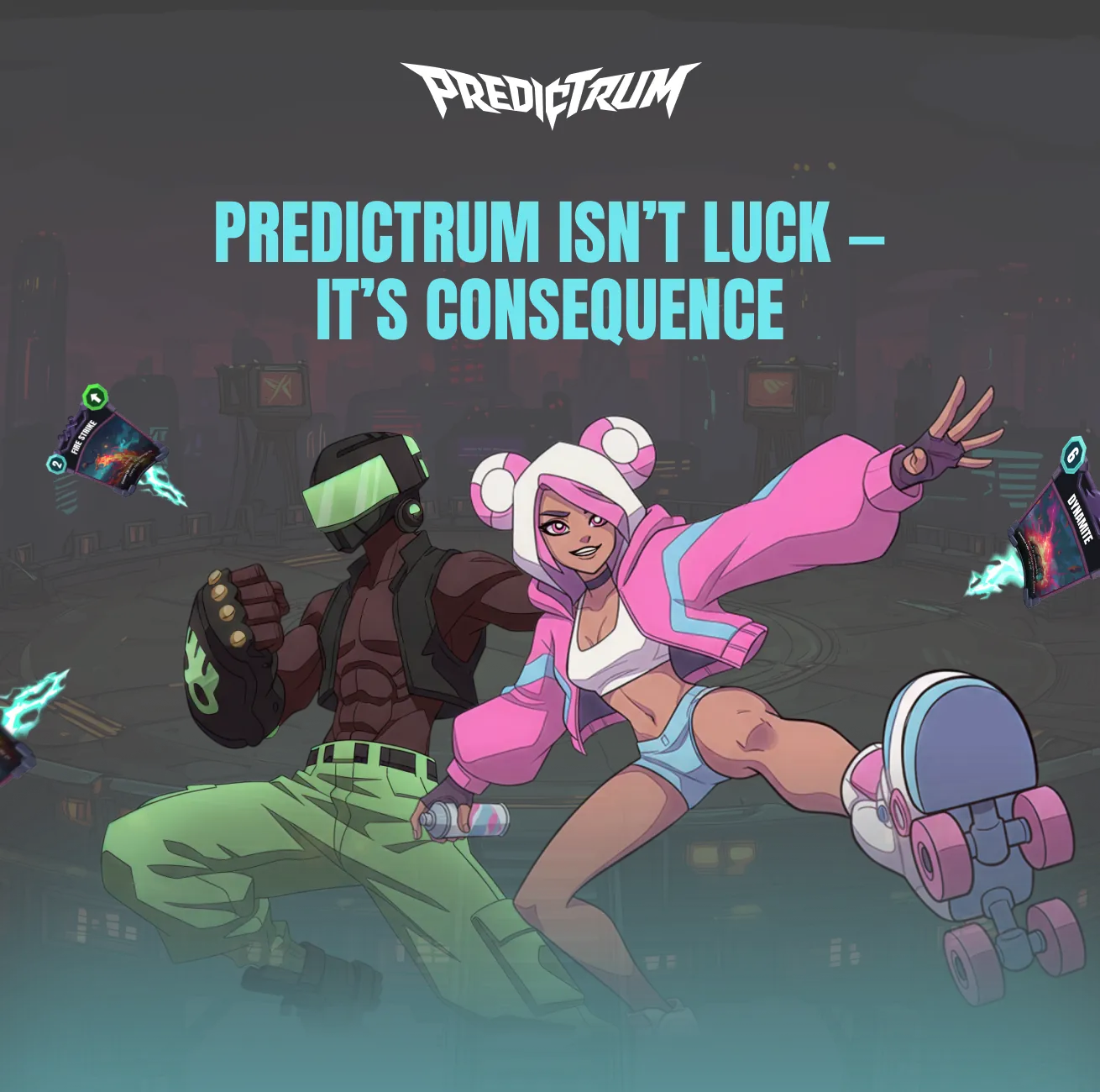
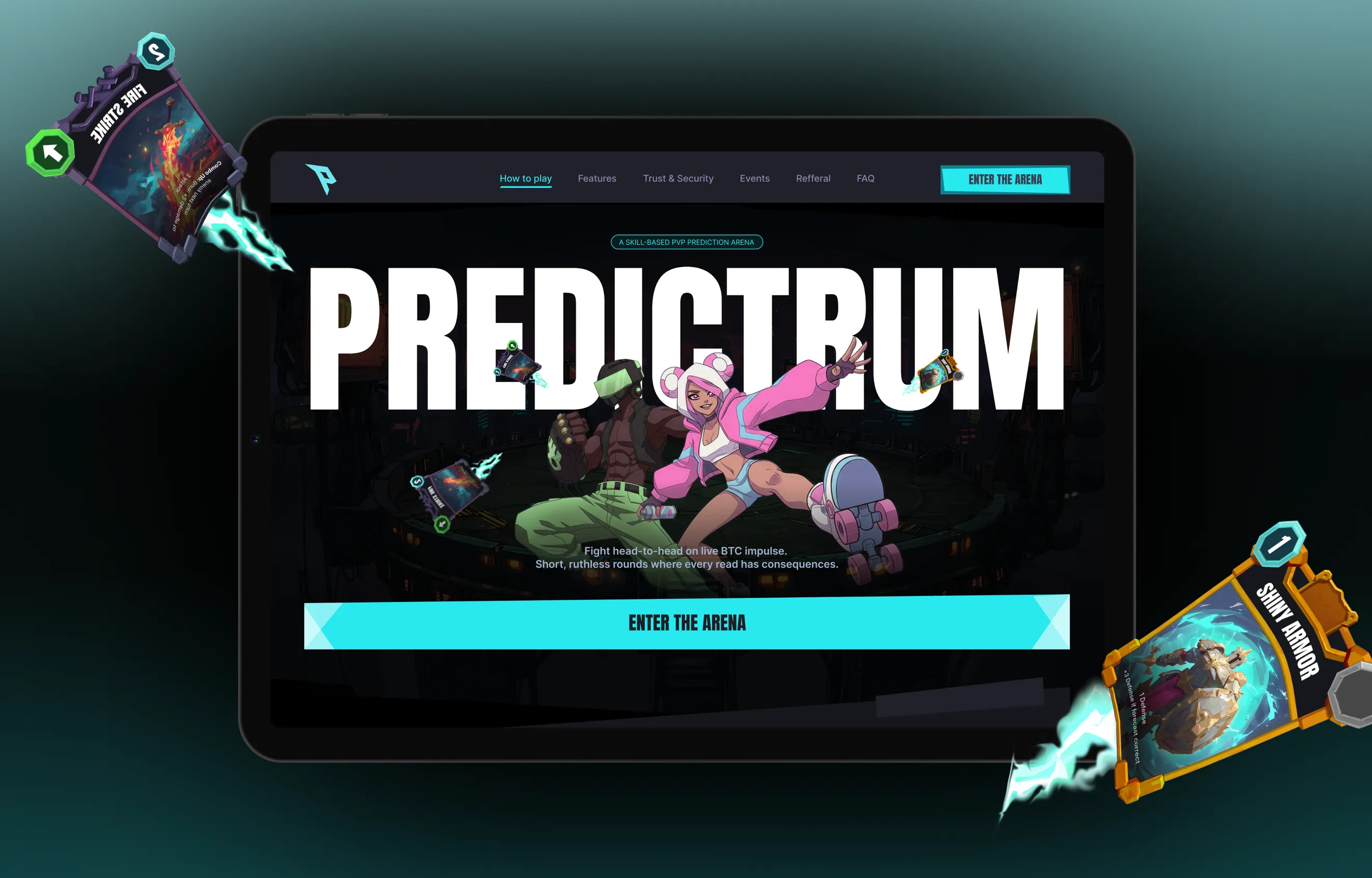
Predictrum is a real-time PvP Web3 game that combines Bitcoin price prediction with strategic card-based combat, turning market volatility into a competitive gameplay experience.
The project came to us at the idea stage, without a defined game loop, clear rules, or a structured progression system. There was no validated core mechanic, no balance between prediction and skill, and no understanding of how on-chain logic should support real-time PvP gameplay. The challenge was not redesigning an existing product, but shaping the product itself — defining what players actually do, why they stay engaged, and how the system remains fair, scalable, and understandable under live conditions.
We worked from first principles to design the game structure, core mechanics, and technical foundation that could support real-time competition, provably fair outcomes, and long-term progression.
Workflow
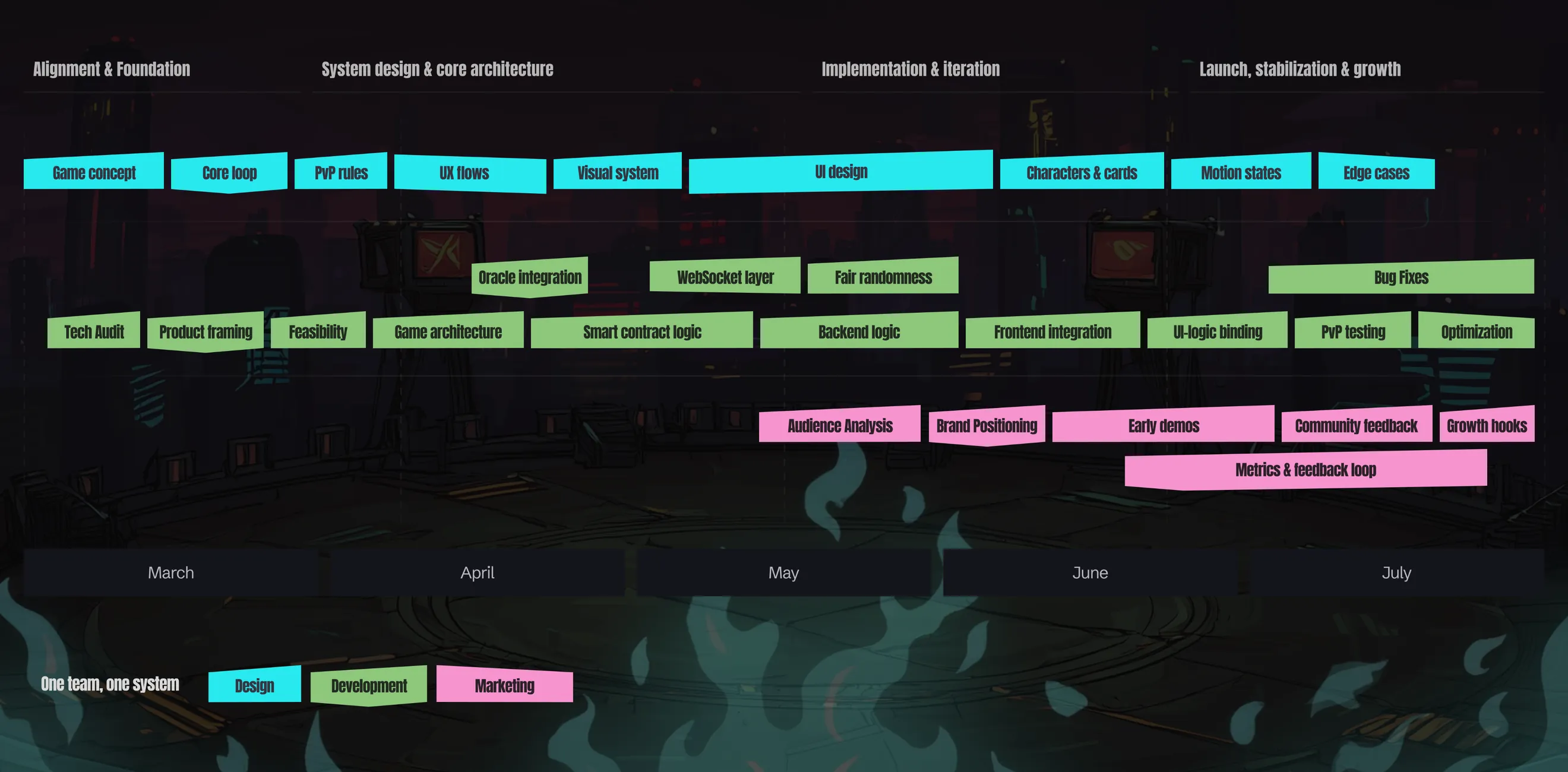
We developed Predictrum from an early-stage idea into a real-time PvP product by aligning game design, technical architecture, and go-to-market logic from day one. Design defined the rules and player decisions, development ensured speed, fairness, and scalability, while marketing shaped positioning and early adoption.
Problem & solution
Predictrum started without a clear game concept, ruleset, or technical foundation. Our task was to shape the game logic, validate feasibility, and build a fair, fast, and understandable PvP system from scratch — while preparing it for real users and growth.
Main problems
1. No clear product concept
At the start, the project existed only as a rough idea without defined gameplay rules, win conditions, or player motivation. There was no shared understanding of what the game actually is or why users would return.
2. High technical uncertainty around real-time PvP
Real-time price-based PvP gameplay introduced risks: latency, desync between players, and fairness concerns. There was no proven architecture to support fast decisions and simultaneous actions.
3. Fairness and trust were hard to communicate
Even with correct mechanics, users could not easily understand or trust how outcomes were calculated. Fairness logic risked being perceived as “black box” behavior.
4. Product hard to explain and scale
Marketing messages did not align with the interface, and development faced limitations when scaling new games.
Our solution
1. No clear product concept
Design teams defined the core PvP loop, betting logic, progression system, and decision points. Marketing validated the concept framing early to ensure it could be explained and positioned clearly to users.
2. High technical uncertainty around real-time PvP
Development designed a real-time backend architecture with WebSocket communication, oracle-based BTC price feeds, and deterministic fair randomness. This ensured synchronized gameplay, predictable outcomes.
3. Fairness and trust were hard to communicate
Provably fair mechanics were embedded into the system. Marketing translated technical fairness into simple, user-facing narratives instead of raw blockchain terminology.
4. Product hard to explain and scale
We restructured Predictrum as a system: with clear UX logic, scalable architecture, and a well-defined value proposition. Marketing received a product ready for large-scale campaigns.
Game experience
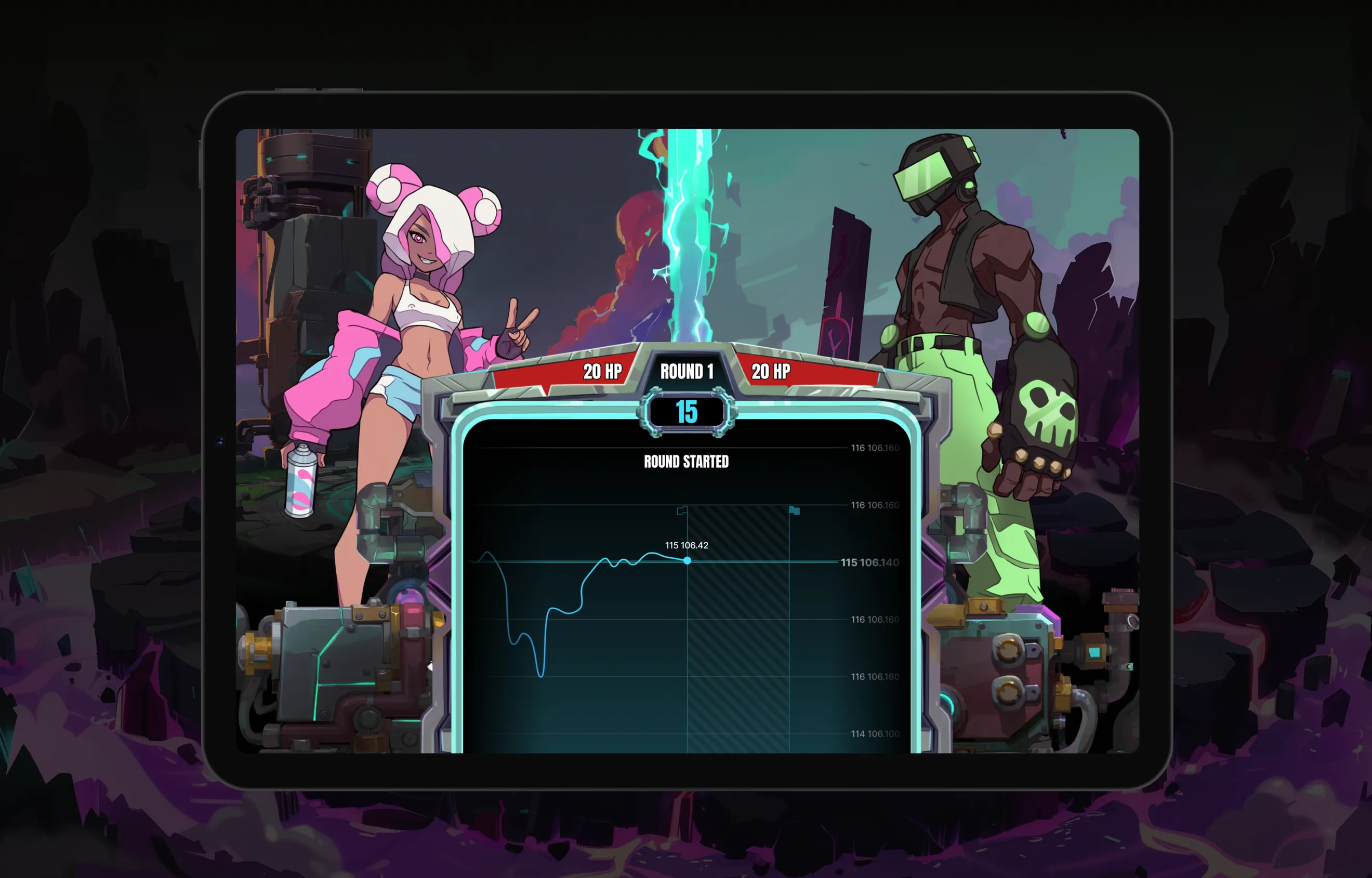
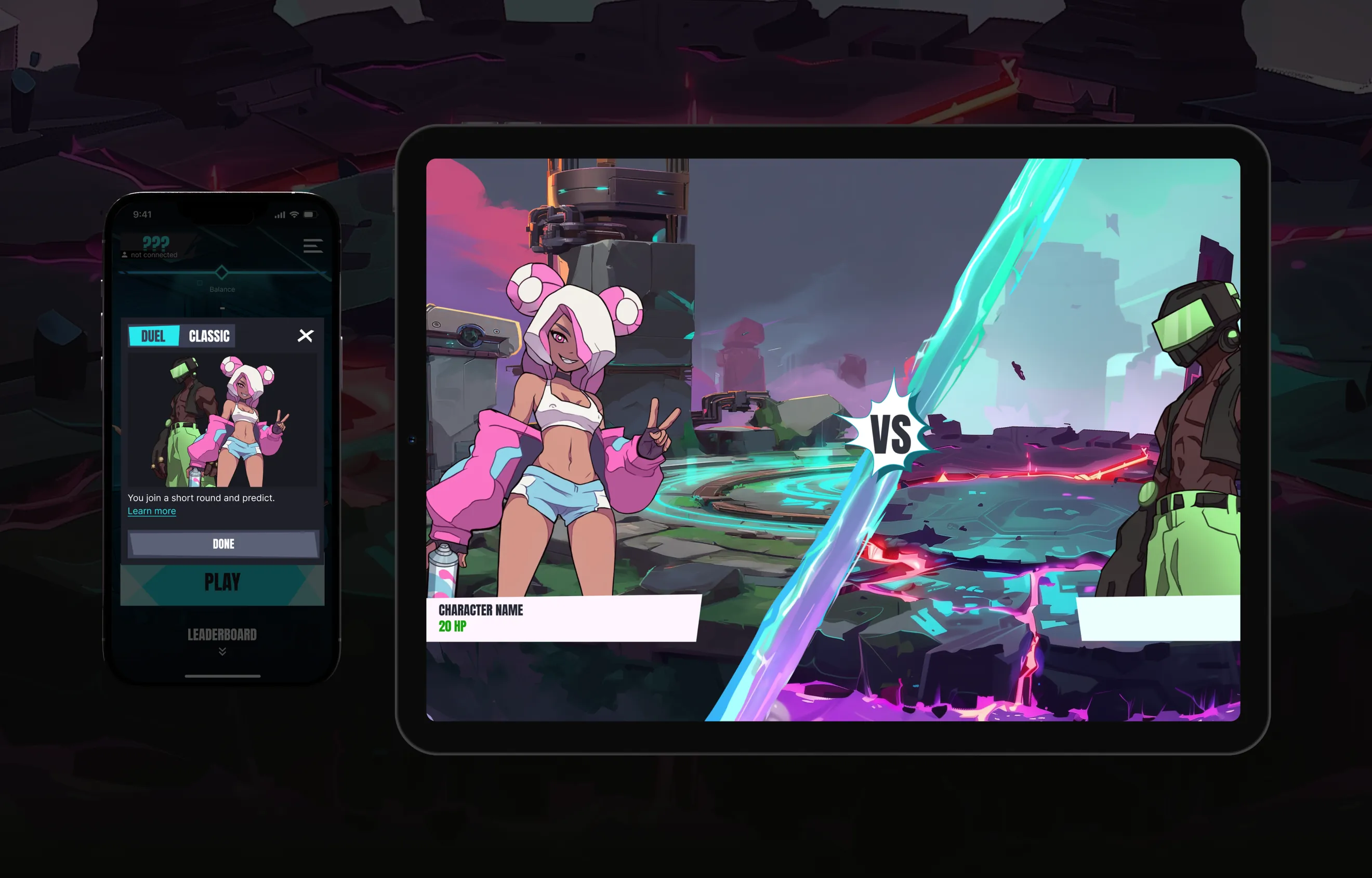
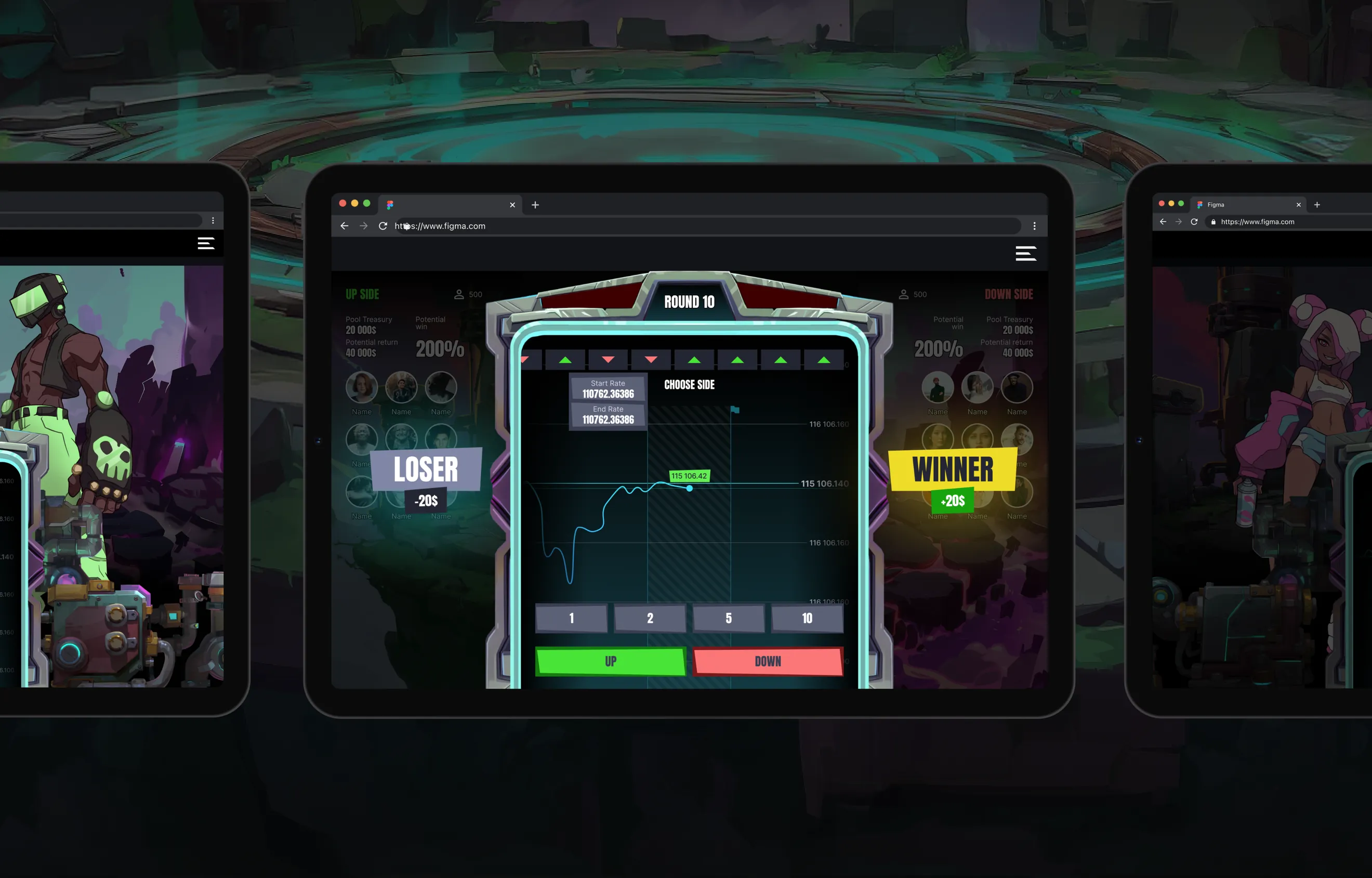
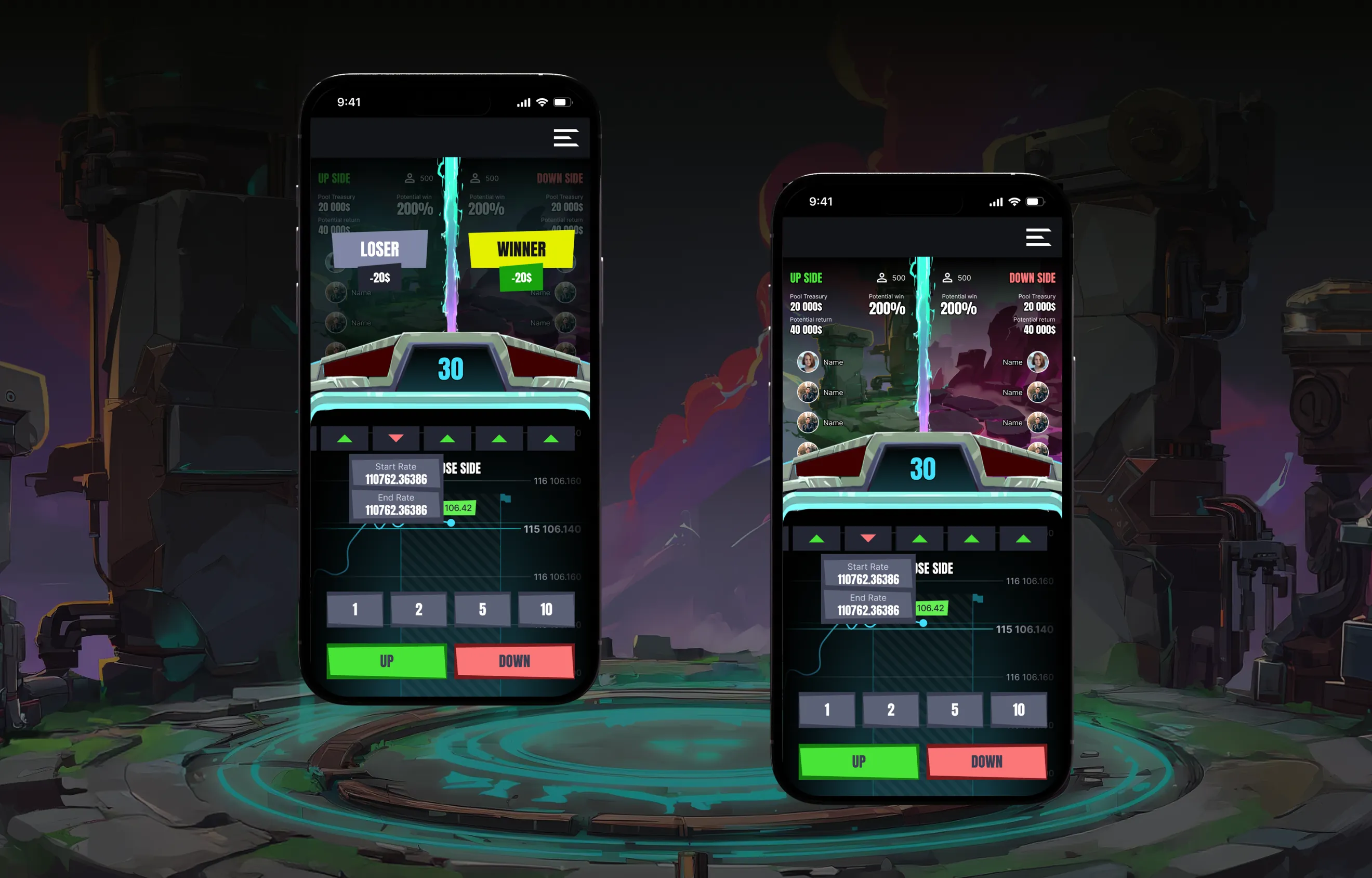
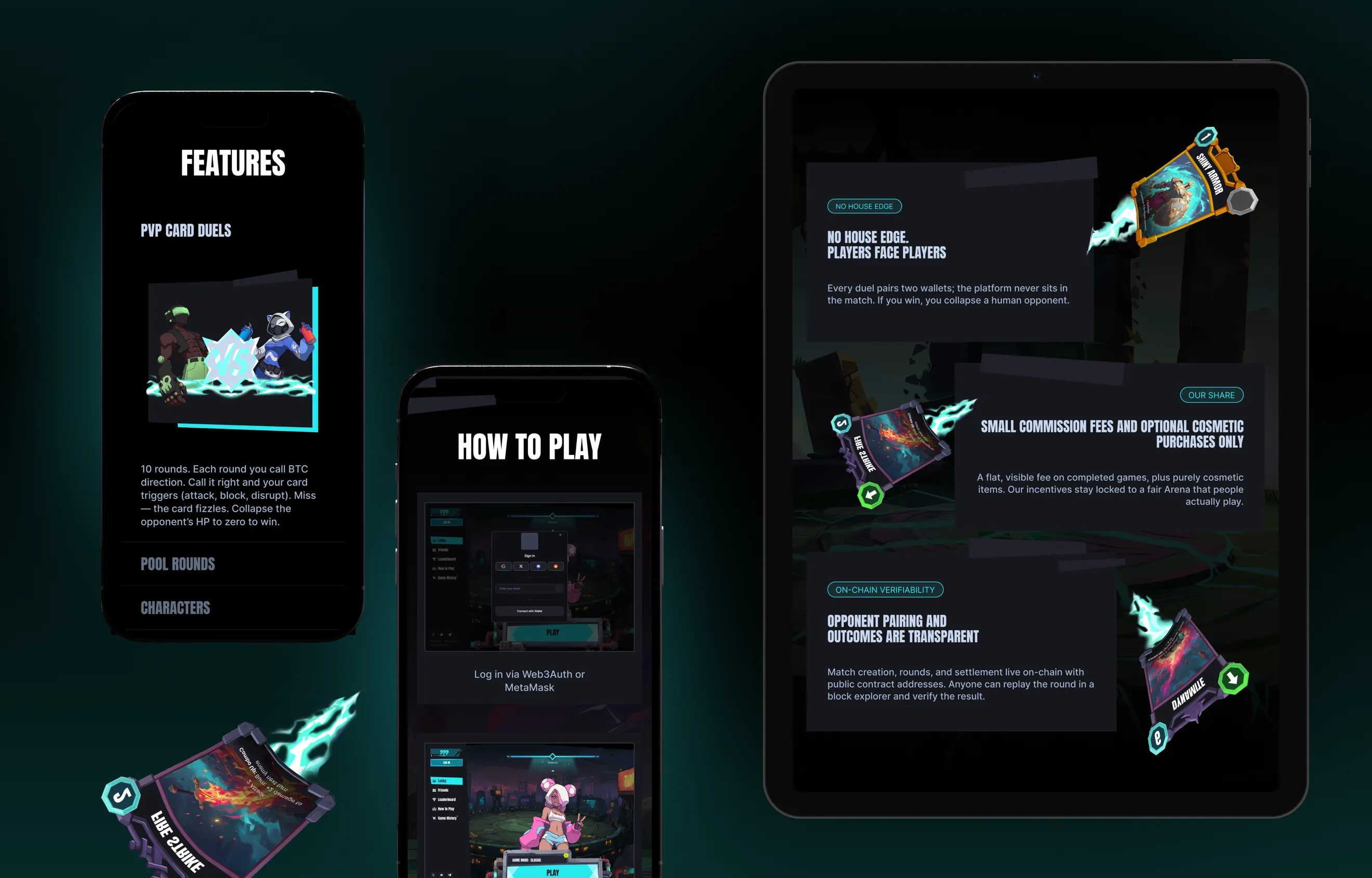
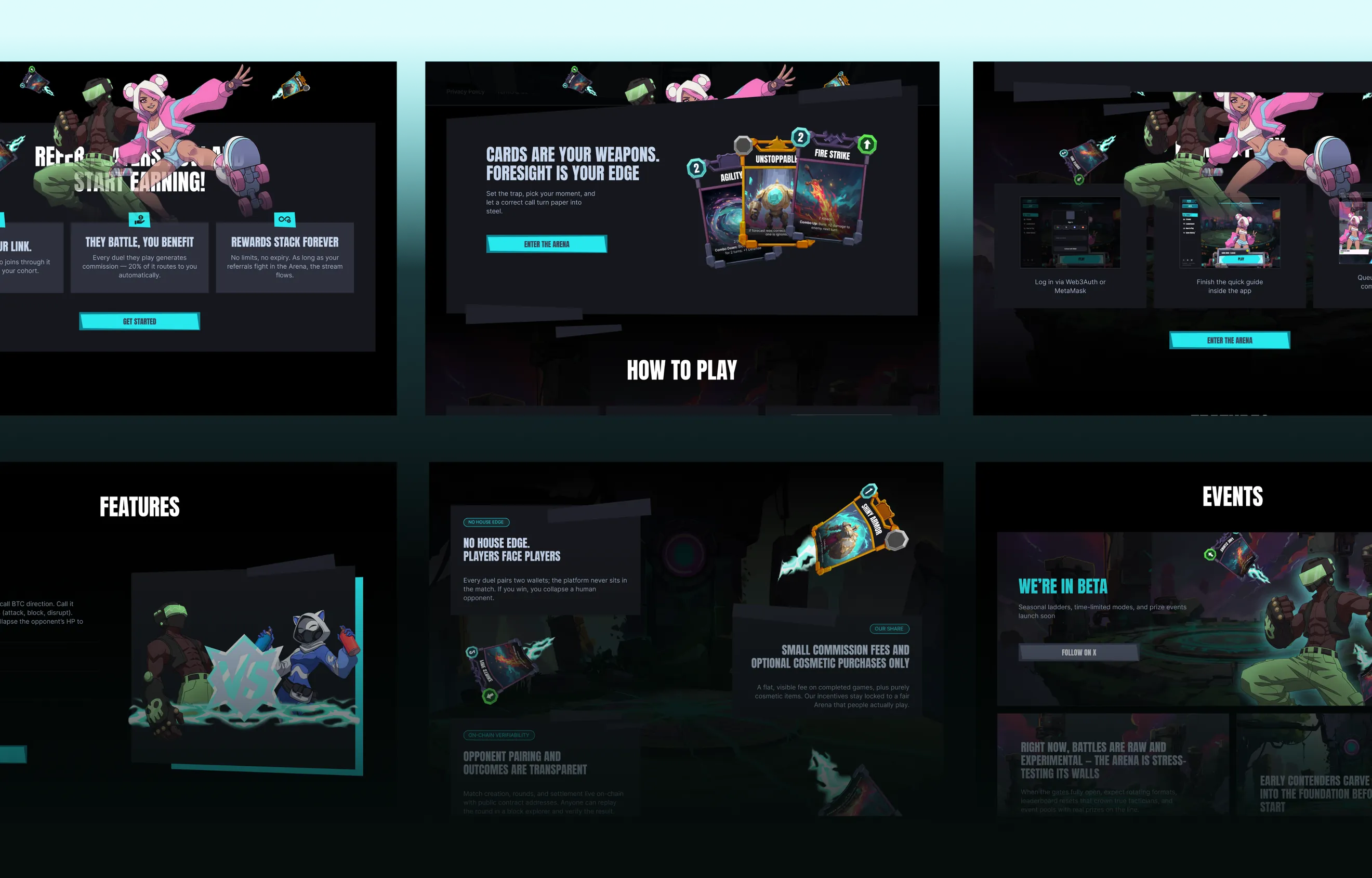
Predictrum's core challenge was turning complex, real-time mechanics into an experience players could instantly understand and trust. We faced issues with decision clarity, timing pressure, fairness perception, and feedback latency during PvP rounds.
Outcome
<300 ms feedback
We reduced delays between player actions and outcomes, making PvP rounds feel responsive and fair.
100% fair rounds
Deterministic randomness and transparent logic eliminated ambiguity around results and increased player trust.
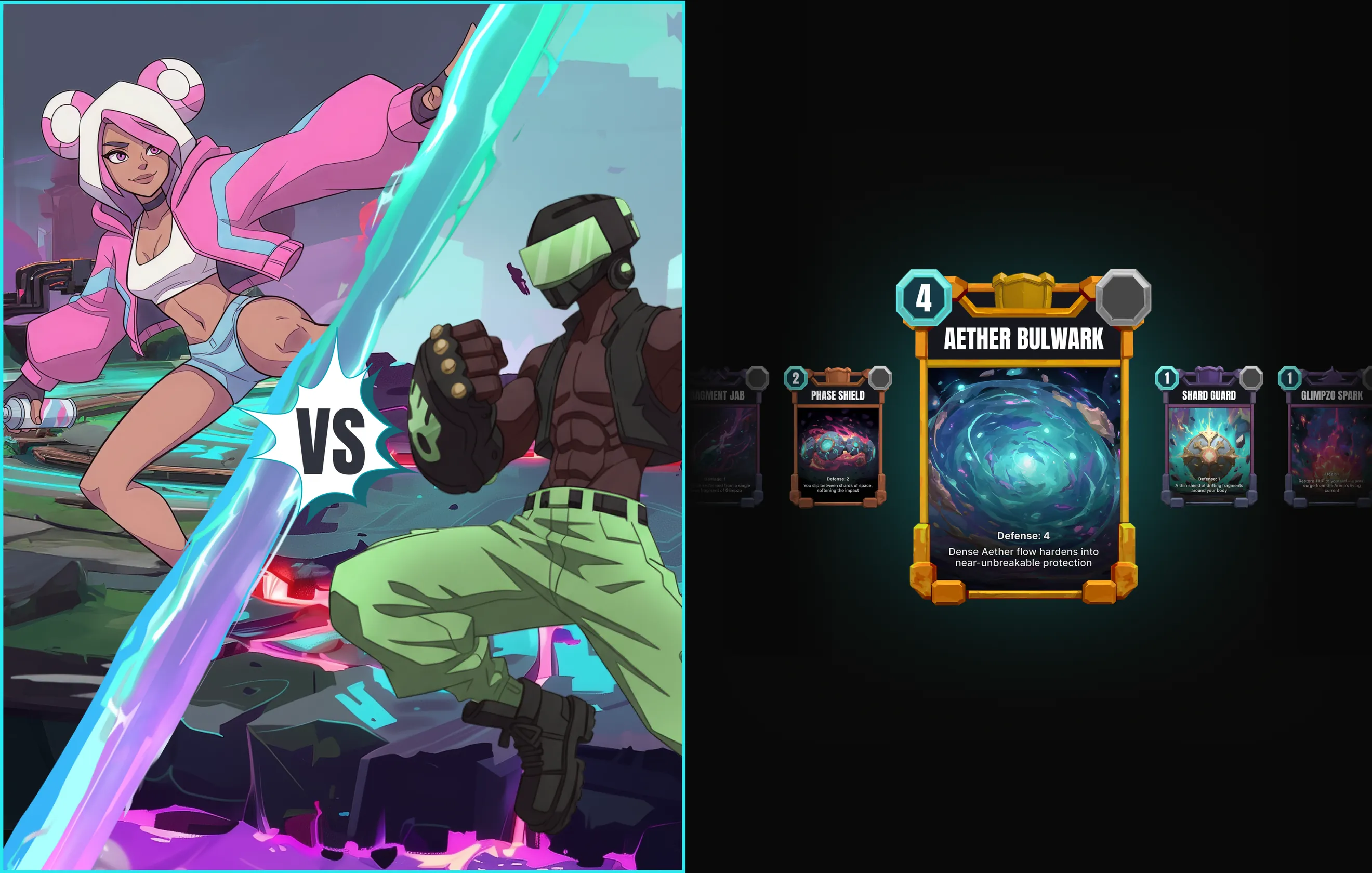
Character system
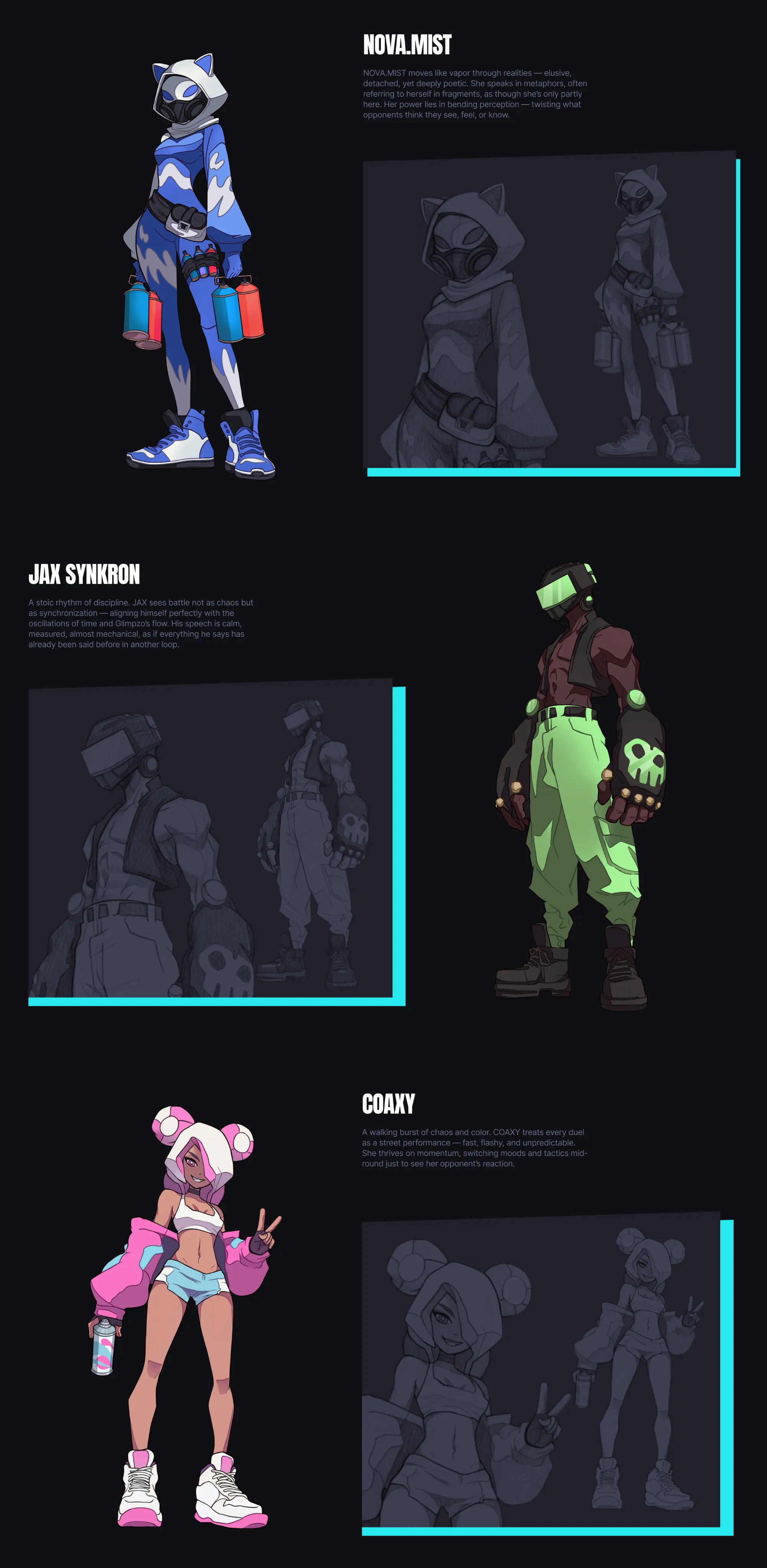
We designed a character system to give the game a recognizable identity and emotional layer beyond mechanics. Instead of abstract avatars or random visuals, we introduced three distinct characters that represent different playstyles, attitudes, and risk behaviors inside the game. This allowed the product to feel more human, memorable, and expandable without increasing UX complexity.
Outcome
Stronger brand recall
Players associate the game with recognizable characters, increasing memorability across platforms
Higher engagement
Characters became natural anchors for rewards, milestones, and status, making progression easier to understand and more motivating.
Marketing & growth
Marketing was built around product mechanics — ambassador program, seasonal events, and game discovery — turning Predictrum into a system ready for scalable acquisition, not just short-term traffic.
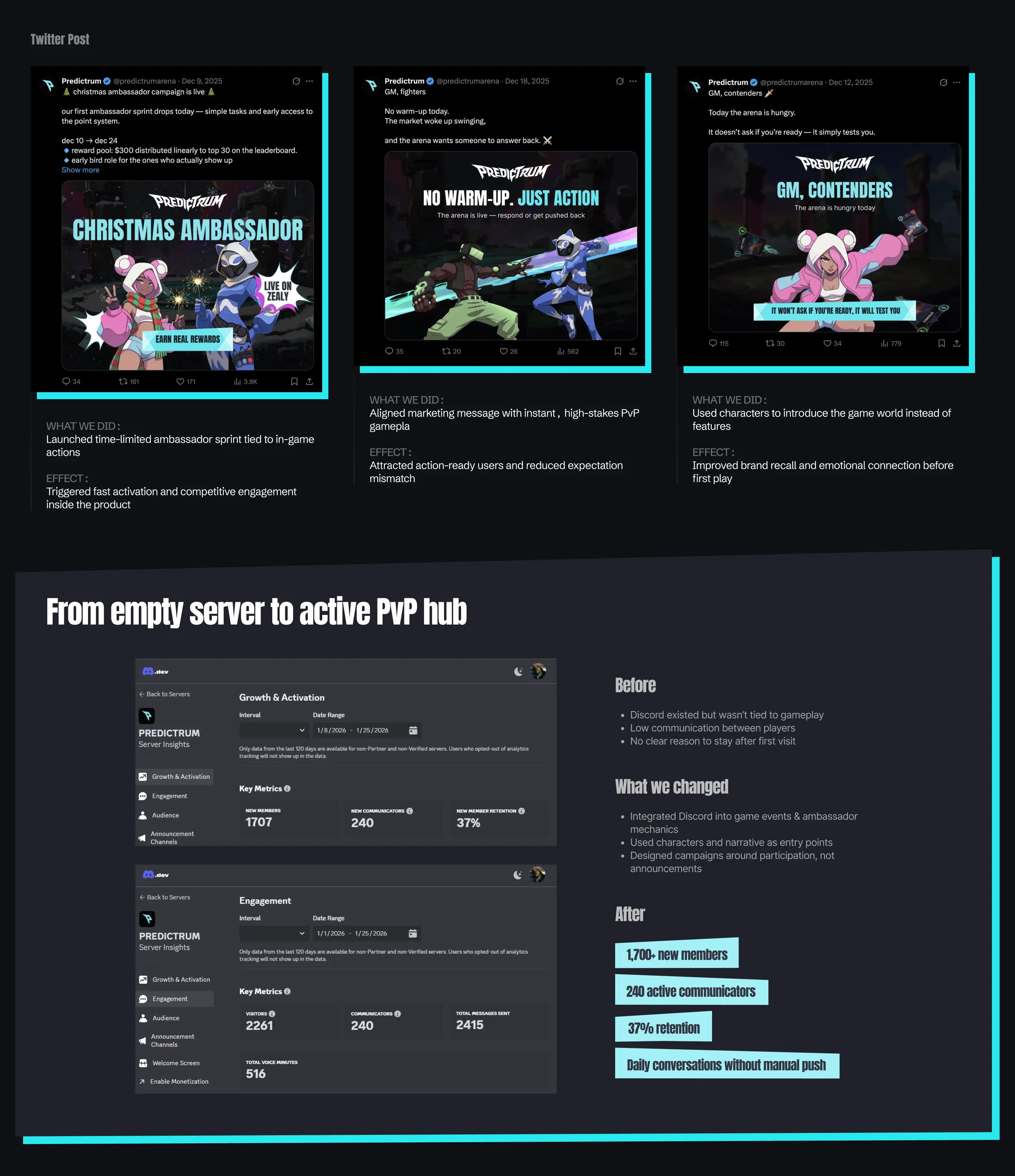
Outcome
900+
Active ambassadors
50
Influencer partnerships
1
Airdrop campaign
600+
Users in the waitlist

Ready to grow your iGaming product?
Tell us what you're building. Within 48 hours you'll get a clear scope and a realistic timeline.